



Dry Needling vs Electrotherapy: Which Is Better?
When it comes to treating muscle pain, stiffness, or injury, two commonly recommended physiotherapy treatments are dry needling and electrotherapy. Both are effective but they work in completely different ways.
If you’re confused about which one is right for you, this guide will help you understand the differences, benefits, and when to choose each.
What Is Dry Needling?
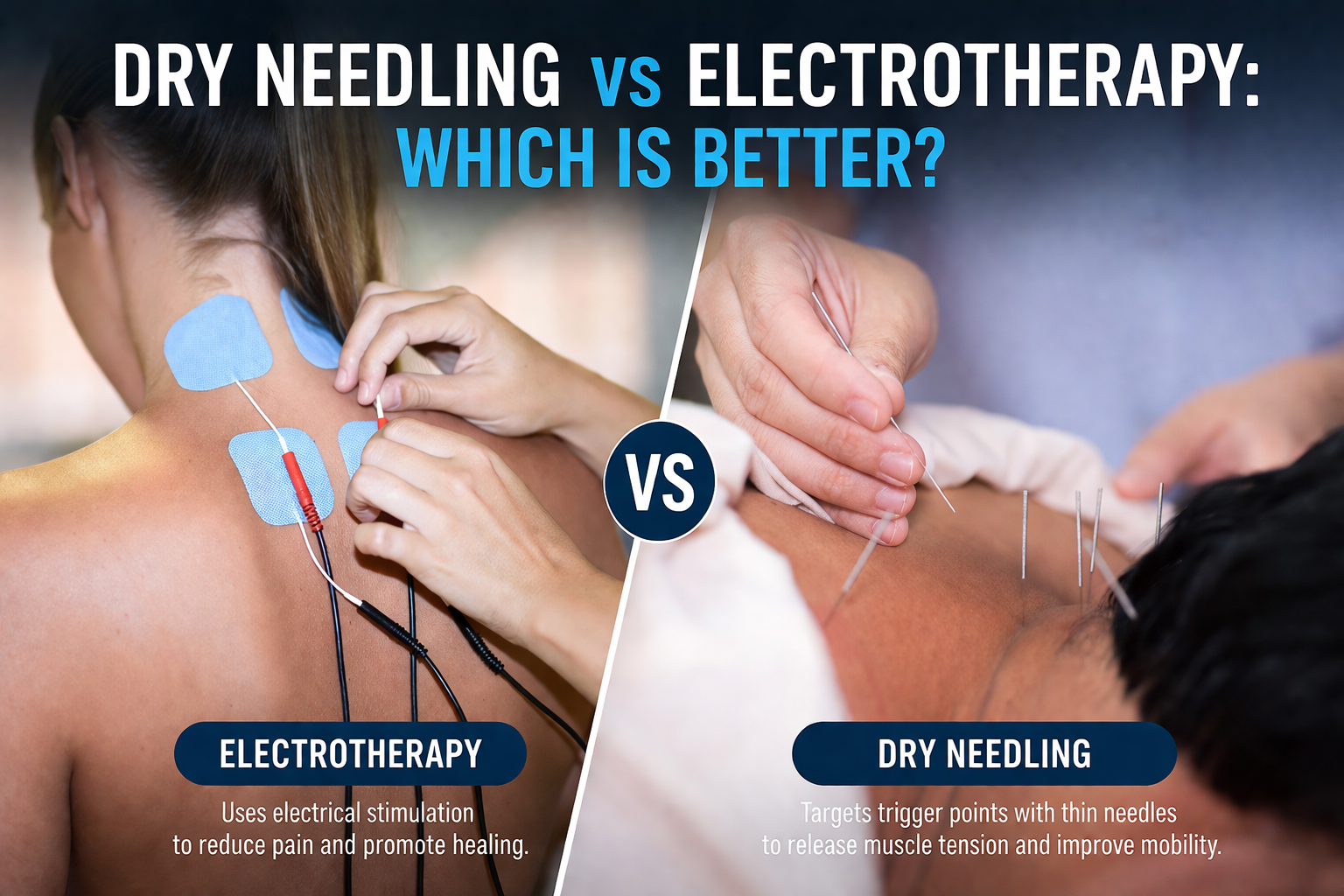
Dry needling is a modern physiotherapy technique used to treat muscle tightness and trigger points (painful knots in muscles). It involves inserting very thin needles into specific points in the muscle to release tension and improve function.
There’s no medicine involved the needle itself stimulates the muscle to relax and heal.
It’s especially useful for deep muscle pain and chronic conditions that don’t respond well to basic treatments.
What Is Electrotherapy?
Electrotherapy uses mild electrical currents to stimulate nerves and muscles. It is commonly used in physiotherapy clinics for pain relief, muscle activation, and faster healing.
Some popular types include:
- TENS (Transcutaneous Electrical Nerve Stimulation) for pain relief
- EMS (Electrical Muscle Stimulation) for muscle strengthening
- Ultrasound therapy for tissue healing
Unlike dry needling, electrotherapy is completely non-invasive.
Key Differences Between Dry Needling and Electrotherapy
Treatment Method
Dry needling uses thin needles inserted into trigger points to release tight muscles. Electrotherapy, on the other hand, uses electrical impulses applied through pads placed on the skin.
Target Area
Dry needling is highly specific and targets deep muscle knots directly. Electrotherapy works on a broader area and stimulates nerves and muscles from the surface.
Sensation During Treatment
Dry needling may cause a brief twitch or discomfort when the needle hits a trigger point. Electrotherapy usually feels like a mild tingling or pulsing sensation and is generally more comfortable.
Purpose and Use
Dry needling is mainly used for releasing muscle knots, reducing tightness, and improving mobility. Electrotherapy is used for pain management, reducing inflammation, and muscle re-education.
Speed of Results
Dry needling often provides faster relief for localized pain. Electrotherapy may require multiple sessions but is effective for gradual recovery and pain control.
Benefits of Dry Needling
Dry needling is ideal for treating stubborn muscle knots and chronic pain. It helps improve range of motion, reduces muscle tension, and restores normal muscle function.
It is commonly used for:
- Neck and shoulder pain
- Back pain
- Sports injuries
- Muscle stiffness
Benefits of Electrotherapy
Electrotherapy is widely used for pain relief and rehabilitation. It helps reduce inflammation, improve blood circulation, and activate weak muscles.
It is especially helpful for:
- Post-injury recovery
- Nerve-related pain
- Muscle weakness
- Swelling and inflammation
Which One Should You Choose?
The right choice depends on your condition and treatment goals.
Choose dry needling if you have deep muscle pain, tight knots, or limited movement that hasn’t improved with basic treatments. It works best for targeted relief.
Choose electrotherapy if you want a non-invasive option for pain relief, muscle stimulation, or recovery after an injury. It’s ideal for gradual healing and overall muscle support.
In many cases, physiotherapists combine both treatments to get better and faster results—using dry needling for deep muscle release and electrotherapy for pain management and recovery.
Is One Better Than the Other?
Neither treatment is universally “better.” They simply serve different purposes.
Dry needling is more effective for specific muscle issues, while electrotherapy is better for overall pain control and rehabilitation.
The best approach often depends on proper diagnosis and a personalized treatment plan.
Final Thoughts
If your pain is sharp, persistent, and linked to tight muscle knots, dry needling may provide faster relief. If your goal is pain reduction, healing, and muscle recovery without discomfort, electrotherapy can be a better option.
Instead of choosing one over the other, consider what your body actually needs. A physiotherapist can guide you toward the most effective combination for long-term results.
FAQs
1. Is dry needling painful?
It can cause slight discomfort when targeting trigger points, but the relief afterward is usually worth it.
2. Is electrotherapy safe?
Yes, electrotherapy is safe and widely used when performed under professional supervision.
3. How many sessions are needed?
It depends on the condition. Some people feel relief in a few sessions, while others may need ongoing treatment.
4. Can I take both treatments together?
Yes, combining dry needling and electrotherapy is common and often more effective.
5. Which is better for muscle recovery?
Electrotherapy is generally better for recovery and muscle activation, while dry needling is better for releasing tight knots.