


Best Yoga Poses for Back Pain: A Physiotherapist’s Complete Guide
Your lower back is stiff again. You reach for your shoes and your spine protests. You’ve tried a heating pad, a painkiller, maybe even a new mattress, and the ache keeps coming back the moment you sit at your desk for a few hours. It’s frustrating, it’s exhausting, and it’s starting to affect your sleep, your mood, and your workday.
Here’s the good news: for most types of everyday back pain, yoga is one of the safest, most evidence-backed ways to build relief that actually lasts, not just a five-minute fix, but real improvement in flexibility, strength, and spinal alignment over weeks. In fact, the American College of Physicians recommends yoga as a first-line treatment for chronic low-back pain, right alongside physiotherapy and structured exercise.
This guide gives you exactly what you need: the science behind why yoga works for back pain, 12 poses picked and explained the way a physiotherapist would explain them to a patient, the poses you should actually avoid, a ready-to-follow 15-minute daily routine, and the warning signs that mean it’s time to stop stretching and start seeing a professional.
Understanding Back Pain
Before you stretch anything, it helps to understand why your back hurts. Back pain isn’t one condition, it’s a symptom with many possible causes, and the right approach depends on which one applies to you.
Poor posture. Slouching rounds your lower back and switches off the deep core muscles that are supposed to support your spine. Held for hours a day, this posture gradually stretches out your back ligaments and overloads your discs.
Sitting for long hours. Prolonged sitting, especially in a chair without lumbar support, increases pressure on your lower spinal discs far more than standing does. IT professionals, customer support staff, and anyone glued to a screen for 8+ hours are especially prone to this.
Weak core muscles. Your abdominal and deep spinal stabilizer muscles act like a natural weight belt. When they’re weak, your spine has to absorb forces it isn’t designed to handle alone, leading to strain and instability.
Herniated discs. The soft cushions between your vertebrae can bulge or rupture, sometimes pressing on nearby nerves. This often causes pain that radiates into the buttock or leg, along with stiffness that’s worse in the morning.
Sciatica. This isn’t a diagnosis on its own, it’s a pattern of nerve pain, usually from a herniated disc or tight piriformis muscle, pressing on the sciatic nerve. It typically feels like a shooting or burning pain running from the lower back or buttock down one leg.
Muscle strain. Lifting something awkwardly, sudden twisting, or overexerting yourself during exercise can strain the muscles and ligaments supporting your spine, causing localized, sharp pain.
Lifestyle habits. Carrying excess weight around the midsection, wearing unsupportive footwear, sleeping on a sagging mattress, low activity levels, smoking (which reduces blood supply to spinal discs), and high stress levels (which increases muscle tension) all contribute to chronic back pain over time.
Most back pain is what physiotherapists call “non-specific”, meaning there’s no single structural cause, but rather a combination of the above factors. This is actually good news, because non-specific back pain responds very well to movement-based treatment like yoga and physiotherapy.
Can Yoga Really Help Back Pain?
Yes, and this isn’t just wellness-industry optimism. Yoga is one of the more effective tools for helping reduce low back pain, the most common source of pain and disability among older adults, according to Harvard Health. Here’s the mechanism behind that claim, broken into the areas that matter most.
Flexibility. Yoga gently lengthens tight muscles, particularly the hamstrings, hip flexors, and lower back muscles, that pull on the pelvis and spine when they’re shortened. Improved flexibility reduces the mechanical strain that causes daily stiffness.
Mobility. Your spine is made up of 24 moveable vertebrae, and pain often develops when certain segments become stiff while others overcompensate. Yoga’s combination of flexion, extension, and rotation movements restores balanced mobility across the whole spine rather than just one area.
Spinal alignment. Many yoga poses train postural awareness, the sense of where your spine is in space. Over time, this awareness helps you catch and correct slouching before it becomes painful.
Muscle strengthening. Yoga can be especially helpful to the muscles that support the back and spine, such as the paraspinal muscles that help you bend your spine, the multifidus muscles that stabilize your vertebrae, and the transverse abdominis in the abdomen, which also helps stabilize your spine. Strengthening these muscles gives your spine the support it needs to handle daily loads without pain.
Stress reduction. Pain and stress feed each other, tense muscles hurt more, and pain increases stress hormones, which further tighten muscles. The slow movements and continuous focus on proper breathing in yoga can improve the emotional aspect of back pain by helping to lower stress and alleviate anxiety and depression.
Pain reduction. A well-known 2017 comparative study found that people with chronic low back pain who practiced yoga saw similar improvements in pain and daily function as those who did structured physiotherapy over the course of a year, and both groups were less likely to use pain medications after three months Separately, research has found that people who practice yoga show small to moderate decreases in pain intensity in the short term, along with slight increases in short- and long-term function
When Yoga Alone Is Not Enough
Yoga is a powerful self-management tool, but it is not a diagnostic tool and it is not a substitute for professional assessment. It won’t identify a herniated disc, won’t correct a structural imbalance that needs manual therapy, and won’t safely guide someone through an acute nerve injury. If your pain is severe, has lasted more than a few weeks, radiates into your leg with numbness or weakness, or hasn’t responded to a couple of weeks of gentle stretching, yoga should be paired with, not used instead of, a physiotherapy assessment. Think of yoga as excellent daily maintenance and prevention; think of physiotherapy as diagnosis, correction, and recovery.
12 Best Yoga Poses for Back Pain
Each of these poses is beginner-friendly and widely recommended by physiotherapists and yoga therapists for general back pain, poor posture, and muscle stiffness. Move slowly, breathe steadily, and never push into sharp pain.
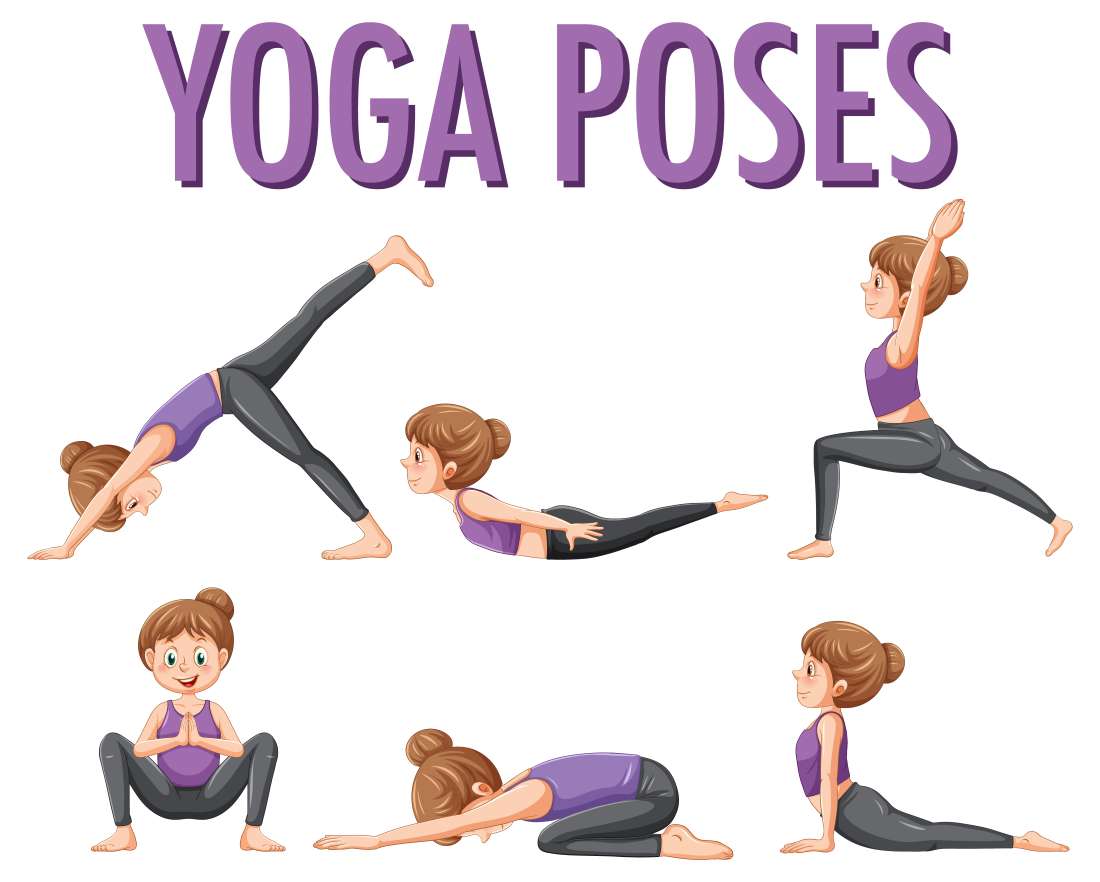
- Child’s Pose (Balasana)
Who benefits: Almost everyone with lower back tightness, stress-related tension, or general stiffness after sitting. Who should avoid it: People with knee injuries, pregnant women (use a wide-knee variation), or those with severe disc herniation that worsens with forward bending.
Benefits: Gently stretches the lower back, hips, and thighs while calming the nervous system.
Step-by-step:
- Kneel on the floor with your big toes touching and knees spread wide.
- Sit your hips back toward your heels.
- Walk your hands forward and lower your chest toward the floor.
- Rest your forehead on the mat or a cushion.
Breathing technique: Slow diaphragmatic breathing, inhale for 4 counts, exhale for 6, letting your back widen with each breath.
Duration: 30 seconds to 2 minutes.
Common mistakes: Forcing the hips all the way to the heels; holding the breath.
Modifications: Place a rolled towel under your ankles or a pillow under your torso for support.
Safety precautions: Stop if you feel sharp knee or lower back pain.
Physiotherapy tip: Use this as a “reset” pose between other stretches, it decompresses the spine after extension-based movements.
- Cat-Cow Pose (Marjaryasana-Bitilasana)
Who benefits: Anyone with general stiffness, poor spinal mobility, or desk-related back pain. Who should avoid it: People with acute wrist injuries or severe disc herniation aggravated by flexion/extension.
Benefits: Improves spine mobility segment by segment and gently massages the muscles along the spine.
Step-by-step:
- Start on all fours, hands under shoulders, knees under hips.
- Inhale, drop your belly, lift your chest and tailbone (Cow).
- Exhale, round your spine, tuck your chin and tailbone (Cat).
- Move slowly between the two.
Breathing technique: Inhale into Cow, exhale into Cat, one breath per movement.
Duration: 8–10 slow rounds. Common mistakes: Moving too fast; only moving the neck instead of the whole spine.
Modifications: Perform seated on a chair if kneeling is uncomfortable.
Safety precautions: Keep movements small if you feel any pinching sensation.
Physiotherapy tip: This is one of the best “spine mobility” warm-ups, use it before any other back exercise.
- Bridge Pose (Setu Bandhasana)
Who benefits: People with weak glutes and core, or those wanting to strengthen the lower back safely. Who should avoid it: People with acute neck injuries or recent hip/knee surgery.
Benefits: Strengthens the glutes, hamstrings, and lower back while opening the chest and hip flexors.
Step-by-step:
- Lie on your back, knees bent, feet flat and hip-width apart.
- Press through your feet and lift your hips toward the ceiling.
- Squeeze your glutes at the top; keep your chin slightly tucked.
- Lower slowly, one vertebra at a time.
Breathing technique: Inhale to prepare, exhale as you lift.
Duration: Hold 20–30 seconds, repeat 3–5 times.
Common mistakes: Overarching the lower back instead of using the glutes; feet too far from the hips.
Modifications: Place a yoga block under the hips for a supported, restorative version.
Safety precautions: Avoid if lifting the hips reproduces sharp lower back pain.
Physiotherapy tip: This pose directly targets the posterior chain weakness that drives most desk-related back pain.
- Sphinx Pose (Salamba Bhujangasana)
Who benefits: People with mild disc-related pain or those who sit for long periods and need gentle extension. Who should avoid it: Anyone whose pain worsens with backward bending, or those with spondylolisthesis.
Benefits: Gently strengthens the spine while stretching the chest and abdomen, a milder alternative to Cobra.
Step-by-step:
- Lie on your stomach, forearms on the floor, elbows under shoulders.
- Press your forearms down and lift your chest slightly.
- Keep your shoulders relaxed and away from your ears.
Breathing technique: Long, slow breaths; avoid straining the breath.
Duration: 30 seconds to 1 minute, repeat 2–3 times.
Common mistakes: Shrugging the shoulders; lifting too high, too fast.
Modifications: Keep elbows further forward for a gentler stretch.
Safety precautions: Stop immediately if you feel pain radiating into the legs.
Physiotherapy tip: Often used as the first extension exercise for people recovering from disc-related pain, it’s the gateway pose before Cobra.
- Cobra Pose (Bhujangasana)
Who benefits: People with tight abdominal muscles and mild lower back stiffness. Who should avoid it: Pregnant women, those with spinal stenosis, or anyone with pain that worsens on extension.
Benefits: Strengthens the spine, opens the chest, and may relieve sciatica-related tension.
Step-by-step:
- Lie face down, hands under shoulders, elbows tucked close to the body.
- Press into your hands and lift your head and chest, keeping a slight bend in the elbows.
- Keep hips grounded throughout.
Breathing technique: Inhale as you lift, breathe normally while holding.
Duration: 15–30 seconds, repeat 2–3 times.
Common mistakes: Locking out the elbows fully; lifting the hips off the floor.
Modifications: Practice Sphinx Pose first if Cobra feels too intense.
Safety precautions: Never force the height of the lift, range should come from spinal extension, not shoulder strength.
Physiotherapy tip: This is a progression exercise, not a starting point, build up from Sphinx Pose over several sessions.
- Supine Spinal Twist (Supta Matsyendrasana)
Who benefits: Anyone with tightness in the lower back, hips, or glutes.
Who should avoid it: People with acute disc herniation, as rotation can aggravate nerve irritation.
Benefits: Releases tension through the spine, hips, and outer thighs; encourages spinal rotation.
Step-by-step:
- Lie on your back, arms out in a T-shape.
- Bring your knees to your chest, then let them fall gently to one side.
- Turn your head in the opposite direction.
- Hold, then switch sides.
Breathing technique: Slow breaths, allowing the body to relax deeper into the twist on each exhale.
Duration: 5–10 breaths per side.
Common mistakes: Forcing the knees to the floor; lifting the opposite shoulder.
Modifications: Place a cushion between the knees or under the lower knee for support.
Safety precautions: If you feel any pain shooting into the leg, come out of the pose immediately.
Physiotherapy tip: A gentle rotational stretch like this is excellent for restoring rotational mobility often lost from prolonged sitting.
- Pelvic Tilt
Who benefits: Almost everyone, this is often the very first exercise physiotherapists teach for back pain. Who should avoid it: Rarely contraindicated; generally safe even in acute pain if performed gently.
Benefits: Activates deep core stabilizers and teaches pelvic control, which reduces excessive lower back arching.
Step-by-step:
- Lie on your back, knees bent, feet flat.
- Flatten your lower back into the floor by gently tilting your pelvis and engaging your lower abdominals.
- Hold briefly, then release.
Breathing technique: Exhale as you tilt and engage; inhale as you release.
Duration: 10–15 repetitions.
Common mistakes: Using the glutes to push the hips up instead of engaging the abdominals.
Modifications: None typically needed, this is one of the safest starting exercises.
Safety precautions: Keep the movement small and controlled.
Physiotherapy tip: This is a core activation exercise disguised as a yoga movement, ideal for beginners or people in the early stages of recovery.
- Knee-to-Chest Pose (Apanasana)
Who benefits: People with general stiffness and tension in the lower back. Who should avoid it: Those with recent hip replacement or advanced disc herniation with leg symptoms.
Benefits: Gently stretches the lower back and glutes while decompressing the lumbar spine.
Step-by-step:
- Lie on your back with legs extended.
- Draw one or both knees toward your chest.
- Hold your shins or the backs of your thighs.
Breathing technique: Slow, even breathing; let the lower back soften with each exhale.
Duration: 30 seconds to 1 minute.
Common mistakes: Pulling too hard and lifting the head/shoulders off the mat.
Modifications: Hold one knee at a time if both together feels too intense.
Safety precautions: Avoid if it increases pain radiating into the legs.
Physiotherapy tip: A useful decompression poses to use right after work when the lower back feels compressed from sitting.
- Happy Baby Pose (Ananda Balasana)
Who benefits: People with tight hips and lower back, especially those who sit frequently. Who should avoid it: Pregnant women (late stages), people with knee injuries.
Benefits: Opens the hips and gently stretches the lower back and inner thighs.
Step-by-step:
- Lie on your back and draw your knees toward your chest.
- Grab the outside edges of your feet, knees wide, ankles above knees.
- Gently rock side to side if comfortable.
Breathing technique: Slow, relaxed breathing throughout.
Duration: 30 seconds to 1 minute.
Common mistakes: Straining the neck by lifting the head; forcing the knees too wide.
Modifications: Hold behind the thighs instead of the feet if hamstrings are tight.
Safety precautions: Stop if it aggravates hip or groin pain.
Physiotherapy tip: Excellent hip-opener that indirectly reduces the pull on the lower back from tight hip flexors and adductors.
- Bird Dog
Who benefits: Almost everyone, a gold-standard core and back stabilization exercise. Who should avoid it: People with wrist injuries or acute shoulder pain.
Benefits: Builds core, glute, and back stability while improving balance and coordination.
Step-by-step:
- Start on all fours, hands under shoulders, knees under hips.
- Extend your right arm forward and left leg back simultaneously.
- Keep your hips level and spine neutral.
- Return with control and switch sides.
Breathing technique: Exhale as you extend, inhale as you return.
Duration: 8–10 repetitions per side.
Common mistakes: Arching the lower back; rushing the movement.
Modifications: Extend just the arm or just the leg if the full movement is too challenging. Safety precautions: Keep movements slow and controlled, this is a stability exercise, not a stretch.
Physiotherapy tip: This is one of the most frequently prescribed rehabilitation exercises in physiotherapy for spinal stability, and it directly builds the core strengthening needed to prevent recurring pain.
- Legs-Up-the-Wall Pose (Viparita Karani)
Who benefits: Almost everyone, especially those with fatigue, swelling in the legs, or general lower back tension. Who should avoid it: People with glaucoma, uncontrolled high blood pressure, or severe hip pain.
Benefits: A restorative, decompressing pose that reduces tension in the lower back and calms the nervous system.
Step-by-step:
- Sit sideways next to a wall, then swing your legs up the wall as you lower your back to the floor.
- Rest your arms by your sides, palms facing up.
- Let your body relax completely.
Breathing technique: Slow diaphragmatic breathing.
Duration: 5–10 minutes.
Common mistakes: Positioning too far from the wall, causing strain in the hamstrings. Modifications: Place a cushion under the hips for extra support.
Safety precautions: Come out slowly by bending the knees and rolling to one side. Physiotherapy tip: One of the best passive recovery poses, recommend it at the end of any back care routine.
- Modified Downward-Facing Dog (Ardha Adho Mukha Svanasana)
Who benefits: People with mild to moderate stiffness looking to build strength and length in the back and hamstrings. Who should avoid it: Those with wrist pain, uncontrolled high blood pressure, or acute disc herniation.
Benefits: Lengthens the spine and hamstrings while building shoulder and core strength, the modified version reduces strain compared to the full pose.
Step-by-step:
- Start on all fours, tuck your toes, and lift your hips up and back.
- Keep your knees bent generously (this is the “modified” element) rather than straightening the legs fully.
- Lengthen your spine rather than forcing your heels to the floor.
Breathing technique: Steady breathing, avoid holding your breath while lifting. Duration: 20–30 seconds, repeat 3–4 times.
Common mistakes: Straightening the legs too soon, which rounds the lower back instead of lengthening it.
Modifications: Practice against a wall or on a chair seat if the floor version is too intense. Safety precautions: Stop if you feel wrist pain or lower back rounding.
Physiotherapy tip: The bent-knee modification is key , it shifts the stretch away from the lower back and into the hamstrings, where most people actually need it.
Yoga Poses You Should Avoid
Not every yoga pose is back-friendly, especially if you already have pain. These poses put significant compressive or shearing force on the spine and are best avoided until you’ve been cleared by a physiotherapist.
Wheel Pose (Urdhva Dhanurasana): This deep backbend places intense compressive load on the lumbar facet joints and requires significant shoulder and spinal mobility most people with back pain don’t yet have.
Deep Forward Fold (Uttanasana, full version): Rounding the entire spine while under load stretches the posterior ligaments excessively and can aggravate disc-related pain, especially with straight knees.
Standing Toe Touch: Combines spinal flexion with the pull of gravity and tight hamstrings, creating high shear force on the lower discs, a common cause of flare-ups.
Advanced Twists (e.g., Revolved Triangle, Marichyasana variations): Deep rotational forces combined with flexion can irritate already-inflamed nerves or discs.
Headstand (Sirsasana): Places substantial compressive load through the cervical and upper spine and requires strength and control most beginners with back pain don’t have; a fall or loss of control can cause serious injury.
Shoulder Stand (Sarvangasana): Similar risks to headstand, with added strain on the neck; also not advisable for anyone with disc issues, high blood pressure, or glaucoma.
Camel Pose (Ustrasana): An intense backbend that compresses the lumbar spine sharply, particularly risky for anyone with existing extension-based pain or spondylolisthesis.
The common thread: these poses demand a level of spinal load, flexibility, or balance that most people recovering from back pain simply haven’t built yet. Master the foundational poses above first, and only progress to advanced poses under the guidance of a qualified instructor or physiotherapist.
15-Minute Daily Yoga Routine
Use this framework to build back care into your day without needing an hour on the mat.
Morning Routine (Wake up the spine)
- Cat-Cow, 10 rounds
- Child’s Pose, 1 minute
- Sphinx Pose, 3 rounds of 30 seconds
- Knee-to-Chest, 1 minute
Office Routine (Between meetings, chair-friendly)
- Seated Cat-Cow (hands on knees), 8 rounds
- Seated spinal twist, 30 seconds per side
- Standing forward fold with bent knees, 30 seconds
- Pelvic tilts (standing against a wall), 10 reps
Evening Routine (Release the day’s tension)
- Cat-Cow, 8 rounds
- Bridge Pose, 5 reps
- Supine Spinal Twist, 1 minute per side
- Legs-Up-the-Wall, 5 minutes
Recovery Routine (After a flare-up or long travel day)
- Pelvic Tilt, 15 reps
- Child’s Pose, 2 minutes
- Knee-to-Chest, 1 minute
- Happy Baby, 1 minute
- Legs-Up-the-Wall, 5–10 minutes
Rotate through these depending on your day, and always listen to your body, if a pose doesn’t feel right, skip it and move to the next.
Yoga vs Physiotherapy
Both have a place in back pain recovery, but they solve different problems.
| Factor | Yoga | Physiotherapy |
| Pain relief | Gradual, through movement and relaxation | Often faster, using targeted manual therapy and exercise |
| Diagnosis | No formal diagnosis | Full clinical assessment to identify the root cause |
| Customization | General poses, some self-modification | Personalized program based on your specific condition |
| Recovery speed | Slower, cumulative benefit | Typically, faster for acute or specific injuries |
| Safety | Generally safe if practiced correctly | Supervised, adjusted in real time by a professional |
| Chronic pain | Very effective for long-term management | Effective, often combined with home exercise programs |
| Acute injury | Limited value; risk of aggravation | Essential for correct diagnosis and safe recovery |
| Long-term results | Excellent for maintenance and prevention | Excellent for resolving the underlying cause |
The takeaway: yoga complements physiotherapy, but it does not replace a professional assessment. If your pain has a specific cause, a herniated disc, sciatica, or a muscle imbalance from an old injury, a physiotherapist can identify exactly what’s driving your pain and build a plan around it, while yoga keeps your spine mobile and strong in the background.
Lifestyle Tips for a Healthier Back
Yoga works best as part of a broader approach to spine health. A few daily habits make a measurable difference:
Sleeping posture. Sleep on your side with a pillow between your knees, or on your back with a pillow under your knees, to keep your spine in a neutral position overnight.
Mattress. A mattress that’s too soft lets your hips sink and your spine curve unnaturally; one that’s too firm creates pressure points. A medium-firm mattress generally offers the best support for most people.
Workstation ergonomics. Set your chair so your feet are flat on the floor, your knees are level with your hips, and your screen is at eye level. A small lumbar cushion can make a significant difference during long sitting hours.
Walking. Just 20–30 minutes of daily walking keeps the spinal discs nourished (they rely on movement, not blood flow, for nutrients) and maintains general mobility.
Hydration. Spinal discs are largely water-based; staying well hydrated supports their cushioning ability throughout the day.
Core exercises. Beyond yoga, simple stability work like planks and bird dogs (see Pose #10 above) builds the deep muscular support your spine needs.
Weight management. Extra weight, especially around the abdomen, shifts your center of gravity forward and increases the load on your lower back.
Stress reduction. Chronic stress keeps your muscles, including the ones supporting your spine, in a constant state of low-grade tension. Breathing exercises, short walks, and adequate sleep all help reduce this baseline tension.
When Should You Stop Doing Yoga?
Yoga should never hurt in a sharp, worsening, or unfamiliar way. Stop your practice and seek medical attention if you experience any of the following:
- Severe pain that doesn’t ease with rest or gentle movement
- Numbness in the legs, feet, or groin area
- Weakness in the legs that makes walking or standing difficult
- Loss of bladder or bowel control, this is a medical emergency and requires immediate attention, as it can indicate cauda equina syndrome, a neurological emergency confirmed with an urgent MRI
- Radiating pain that travels further down the leg or worsens with movement
- Fever alongside back pain, which can indicate infection
- Recent trauma, such as a fall or car accident, before attempting any new exercise
Standard sciatica does not affect bladder or bowel control, this is a critical distinction from cauda equina syndrome, so any new bladder or bowel changes alongside back pain should be treated as urgent, not something to stretch through.
When to Visit a Physiotherapist
If your back pain has lasted more than two to three weeks, keeps returning, limits your daily activities, or hasn’t improved with gentle yoga and lifestyle changes, it’s time for a professional assessment rather than more guesswork.
This is exactly where The Fysit fits into your recovery. A qualified physiotherapist doesn’t just give you exercises, they identify why your back hurts in the first place, whether that’s a postural imbalance, a specific joint restriction, muscle weakness, or a nerve-related issue that needs a different approach altogether. From there, treatment is built specifically around your body, your daily routine, and your goals.
The Fysit offers a full range of services designed around exactly this kind of personalized recovery: clinical physiotherapy for accurate diagnosis and hands-on treatment, orthopedic physiotherapy for joint and structural issues, sports physiotherapy for athletes managing training-related back strain, pain management programs for chronic or recurring pain, structured rehabilitation programs to rebuild strength safely, posture correction for desk-related pain, corporate ergonomic assessments for teams affected by long sitting hours, and doorstep physiotherapy for anyone who’d rather recover in the comfort of their own home.
Yoga can be an excellent daily habit for your back. But when pain persists, professional guidance gets you back to pain-free movement faster and more safely than self-treatment alone.
Frequently Asked Questions
- Can yoga make back pain worse?
Yes, if the wrong poses are chosen or performed with poor form. Deep backbends, forceful twists, and forward folds with straight legs are the most common culprits. Gentle, physiotherapist-approved poses like those above are generally safe.
- How often should I do yoga for back pain?
Daily practice of 10–15 minutes is more effective than occasional long sessions, since consistency builds the mobility and strength that prevent pain from returning.
- Is yoga good for herniated disc pain?
Gentle extension-based poses like Sphinx Pose can help some people with disc-related pain, but it depends entirely on the direction and severity of the herniation. A physiotherapy assessment is strongly recommended before starting.
- Which yoga pose is best for instant back pain relief?
Child’s Pose and Legs-Up-the-Wall are typically the most immediately soothing, as both gently decompress the spine and calm the nervous system.
- Can beginners do yoga for back pain? Absolutely.
All 12 poses in this guide are beginner-friendly and require no prior yoga experience.
- Is yoga better than stretching for back pain?
Yoga includes stretching but also adds strengthening, breathing, and body-awareness elements, making it generally more comprehensive than stretching alone.
- How long does it take for yoga to help back pain?
Many people notice reduced stiffness within 1–2 weeks of daily practice, though meaningful strength and mobility improvements typically take 6–8 weeks of consistency.
- Can yoga help sciatica?
Certain gentle poses, like Supine Spinal Twist and Knee-to-Chest, may relieve pressure on the sciatic nerve, but any pose that increases leg pain or numbness should be stopped immediately.
- Should I do yoga during a back pain flare-up?
Gentle poses like Pelvic Tilt and Child’s Pose are generally safe during a flare-up, but intense stretching or strengthening poses should wait until the acute pain settles.
- Can yoga fix poor posture permanently?
Yoga builds the strength and awareness needed to maintain better posture, but lasting change also requires addressing daily habits like workstation setup and sitting time.
- Is it safe to do yoga every day?
Yes, for most people, provided you’re using gentle, appropriate poses and listening to your body’s signals rather than pushing through pain.
- What yoga poses help with upper back and neck pain?
Cat-Cow and Sphinx Pose both help mobilize the upper back, while gentle neck rolls (not covered in this spine-focused guide) can relieve associated tension.
- Can pregnant women do yoga for back pain?
Many gentle poses are safe with modifications, but pregnant women should avoid deep twists, prone poses, and any pose that compresses the abdomen, and should consult their doctor first.
- Do I need a yoga mat and props?
A basic mat is helpful for comfort and grip. A cushion, folded blanket, or yoga block can make several poses (like Child’s Pose and Bridge Pose) more comfortable, especially for beginners.
- Can yoga replace physiotherapy?
No. Yoga is excellent for general maintenance and prevention, but physiotherapy provides diagnosis and targeted treatment for specific conditions, which yoga cannot replace.
- What’s the difference between yoga for back pain and general yoga classes? General yoga classes often include advanced poses not suitable for back pain, while a back-pain-focused routine, like the one in this guide, is specifically screened for spine safety.
- Can core weakness cause back pain even without an injury?
Yes. Weak core muscles fail to support the spine adequately during everyday movement, gradually leading to strain and pain even without a specific injury event.
- Is walking or yoga better for back pain?
They work well together, walking maintains general spinal health and circulation, while yoga specifically targets flexibility, strength, and alignment.
- Can office chairs and desk setup really cause back pain?
Yes. Poor ergonomics, low screens, unsupported lower backs, and prolonged static sitting , are among the most common causes of chronic back pain in office workers.
- When should I stop trying home remedies and see a physiotherapist?
If pain lasts more than 2–3 weeks, keeps recurring, or is accompanied by numbness, weakness, or radiating leg pain, it’s time to book a physiotherapy assessment rather than continue self-treatment.
- Does The Fysit offer physiotherapy for back pain at home?
Yes. The Fysit’s doorstep physiotherapy service brings personalized back pain assessment and treatment directly to your home.
Conclusion
Back pain rarely has one single cause, but it almost always responds to consistent, well-chosen movement. The 12 poses in this guide, from Child’s Pose to Bird Dog, target the flexibility, mobility, and core strength your spine needs, while the poses to avoid and the warning signs section help you practice safely rather than by guesswork. Build these into a short daily routine, pair them with better sleep and workstation habits, and you’ll likely notice real improvement within a few weeks.