


What Does an Orthopedic Doctor Treat? A Complete Guide to Bone, Joint, and Muscle Health
You wake up with a stiff knee. Or your lower back has been nagging you for weeks. Maybe you twisted your ankle during a weekend game and it still hasn’t settled down. At some point, most of us ask the same question: is this serious enough to see a doctor, and if so, which one?
If the problem is in your bones, joints, muscles, ligaments, or tendons, the answer is usually an orthopedic doctor. But many people aren’t sure what that actually covers. Some think orthopedic doctors only handle fractures. Others assume they only do surgery.
Neither is true. In this guide, we’ll walk through exactly what an orthopedic doctor treats, the common conditions they see, when it’s time to book an appointment, and how physiotherapy fits into your recovery.
What Is an Orthopedic Doctor?
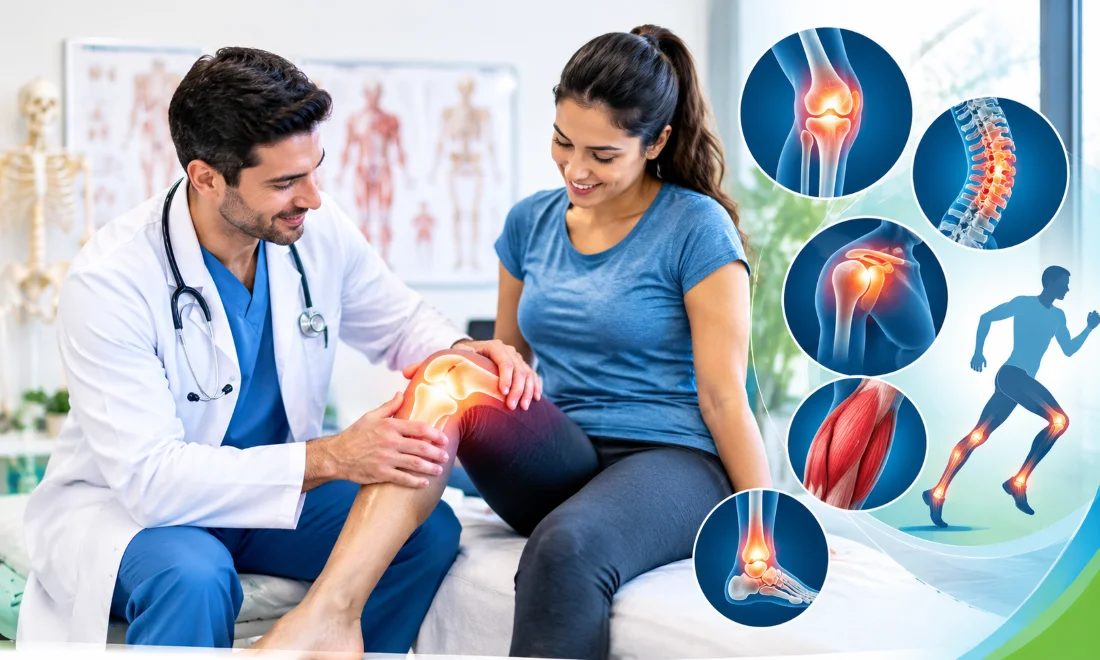
An orthopedic doctor is a medical specialist who diagnoses and treats problems of the musculoskeletal system. That’s the framework of your body: bones, joints, muscles, ligaments, tendons, and the spine, along with the nerves that run through them.
To become one, doctors complete medical school followed by years of focused training in orthopedics. Some then go on to specialise further in areas like sports injuries, joint replacement, spine care, or paediatric orthopedics.
One point worth clearing up: an orthopedic doctor is not the same as an orthopedic surgeon, though the terms overlap. Many orthopedic doctors manage most conditions without surgery, using medication, injections, bracing, and rehabilitation. Surgery is generally recommended only when other options haven’t worked or when the injury is severe.
What Does an Orthopedic Doctor Treat?
The short answer is anything that affects how your body moves and supports itself. Here are the main areas.
Bone Problems
Your bones give you structure and protect vital organs, and they can be affected by injury, age, and disease. An orthopedic doctor treats:
- Fractures and broken bones, from small hairline cracks to complex breaks that need surgical fixing
- Osteoporosis, where bones become thin and weak, raising the risk of fractures
- Bone infections (osteomyelitis)
- Bone deformities, including those present from birth or caused by earlier injuries
- Bone tumours, both benign and cancerous, usually in coordination with other specialists
Joint Problems
Joints are where two bones meet, such as your knees, hips, shoulders, elbows, wrists, and ankles. They take a lot of daily wear. Common joint conditions include:
- Osteoarthritis, the gradual breakdown of joint cartilage, which is very common in the knees and hips as we age
- Rheumatoid arthritis, an autoimmune condition that causes joint swelling and pain (often managed together with a rheumatologist)
- Gout, which causes sudden, intense joint pain, often in the big toe
- Joint dislocations, where a bone slips out of its normal position
- Bursitis, inflammation of the small fluid-filled cushions around joints
- Joint replacement needs, such as knee or hip replacement when the joint is badly damaged
Muscle, Ligament, and Tendon Injuries
These soft tissues connect and move your skeleton, and they’re among the most commonly injured. Orthopedic doctors treat:
- Sprains, which are stretched or torn ligaments, like a rolled ankle
- Strains, which are pulled or torn muscles or tendons
- ACL and meniscus tears in the knee, very common in sports like football, cricket, and badminton
- Rotator cuff injuries in the shoulder
- Tendonitis, such as tennis elbow, golfer’s elbow, and Achilles tendon pain
- Frozen shoulder, where the shoulder becomes painfully stiff and hard to move
If you’re curious about how some of these tissues differ, our article on cartilage vs ligament explains the difference in simple terms.
Spine and Back Conditions
Back and neck pain are among the top reasons people visit an orthopedic doctor. Conditions include:
- Slipped or herniated discs
- Sciatica, pain that travels from the lower back down the leg (see our guide on sciatica causes, symptoms, and physiotherapy)
- Spinal stenosis, a narrowing of the spinal canal
- Scoliosis, a sideways curve of the spine
- Cervical spondylosis, age-related wear in the neck
- Chronic lower back pain from posture, strain, or degeneration
Hand, Wrist, Foot, and Ankle Problems
Smaller joints get their share of trouble too:
- Carpal tunnel syndrome, causing numbness and tingling in the hand
- Trigger finger
- Plantar fasciitis, a common cause of heel pain
- Bunions and flat feet
- Ankle instability after repeated sprains
Sports Injuries
Whether you’re a professional athlete or someone who just started jogging, sports injuries are a big part of orthopedic care. Overuse injuries, stress fractures, ligament tears, and muscle damage all fall under this area, and an orthopedic doctor will also guide you on safe return to play.
Children’s Bone and Joint Conditions
Kids aren’t just small adults, and their growing bones need special attention. Orthopedic doctors treat clubfoot, hip dysplasia, growth-related bone problems, scoliosis, and childhood fractures.
How Does an Orthopedic Doctor Diagnose a Problem?
The process usually starts with a conversation. The doctor will ask when the pain began, what makes it better or worse, and how it affects your daily life. Then comes a physical examination, where they check movement, strength, swelling, and tenderness.
If needed, they may suggest:
- X-rays to look at bones and joint alignment
- MRI scans for detailed views of soft tissue like ligaments, discs, and cartilage
- CT scans for complex bone injuries
- Ultrasound to check tendons and muscles
- Blood tests to look for infection, arthritis markers, or other causes
Not everyone needs every test. A good doctor orders scans only when they’ll actually change the treatment plan.
Do Orthopedic Doctors Only Perform Surgery?
No, and this is probably the biggest myth around. In fact, most patients who visit an orthopedic doctor are treated without an operation.
Non-surgical treatments include:
- Pain-relief and anti-inflammatory medication
- Rest and activity changes
- Braces, supports, or casts
- Injections for joint or tendon pain
- Physiotherapy and guided exercise
- Lifestyle advice, such as weight management and ergonomics
Surgery enters the picture for severe fractures, major ligament tears, advanced joint damage, or nerve compression that isn’t responding to other care. Even then, the surgery is only part of the story. Recovery is where much of the real work happens.
When Should You See an Orthopedic Doctor?
Plenty of aches fade within a few days. But some signs mean you shouldn’t wait it out. Consider booking an appointment if you notice:
- Pain that lasts more than a week or two, or keeps coming back
- Swelling, redness, or warmth around a joint
- Difficulty walking, standing, or putting weight on a limb
- Stiffness that limits everyday movement
- A joint that clicks, locks, or feels like it might give way
- Numbness, tingling, or weakness in your arms or legs
- Pain after a fall or accident
- A visible deformity or a limb that looks out of shape
- Back pain that wakes you at night or doesn’t improve with rest
Go to an emergency room straight away if you suspect a serious fracture, can’t move a limb, have severe pain after an injury, or lose sensation or control in your legs.
Orthopedic Doctor vs. Physiotherapist: What’s the Difference?
This is a question we hear often, and the two roles actually work well together.
An orthopedic doctor diagnoses the condition, decides whether you need medication, injections, or surgery, and manages the medical side of your problem.
A physiotherapist helps you recover and move better. Through targeted exercises, manual therapy, and movement training, they restore strength, flexibility, and function, and they help prevent the problem from returning.
Think of it this way: the doctor figures out what’s wrong and what medical treatment is needed, while the physiotherapist helps you get back to normal life and stay there. After a fracture, a ligament injury, or joint replacement, physiotherapy is often what separates a slow, uncertain recovery from a confident one. Many people with back pain, sciatica, or shoulder issues also find that physiotherapy alone resolves the problem once the doctor has ruled out anything serious.
Simple Habits to Protect Your Bones, Joints, and Muscles
You can’t prevent every injury, but a few steady habits go a long way:
- Stay active. Regular walking, stretching, and strength work keep joints supple and muscles strong.
- Eat for your bones. Calcium, vitamin D, and enough protein support bone and muscle health. Many people in India are low on vitamin D, so it’s worth checking.
- Watch your posture. Long hours at a desk strain the neck and lower back. Adjust your chair, screen height, and take movement breaks.
- Warm up properly. Skipping the warm-up before exercise is a classic route to a strain.
- Maintain a healthy weight. Extra weight puts added pressure on knees, hips, and the spine.
- Wear supportive footwear. Your feet affect everything above them.
- Don’t push through sharp pain. Discomfort is normal during exercise; sharp or persistent pain is a signal to stop and get it checked.
Finding the Right Orthopedic Care in Bangalore
If you’re in Bangalore, getting seen early can make a real difference to how quickly you recover. At The Fysit, we work closely with patients dealing with bone, joint, and muscle conditions, combining expert assessment with personalized physiotherapy. You can find orthopedic care near you at our orthopedic doctor in Kasturi Nagar and orthopedic doctor in Sadanandanagar pages, or visit thefysit.com to learn more about our services and book a consultation.
Frequently Asked Questions
An orthopedic doctor treats conditions of the bones, joints, muscles, ligaments, tendons, and spine. This includes fractures, arthritis, sprains, ligament tears, back and neck pain, sports injuries, and joint problems in both adults and children.
In most cases, no. You can book a consultation directly if you have bone, joint, or muscle pain. Some insurance plans may ask for a referral, so it’s worth checking your policy.
Not exactly. An orthopedic surgeon is an orthopedic doctor who performs surgery. Many orthopedic doctors treat most conditions without operating and only refer you for surgery when it’s truly needed.
If you’ve had a significant injury, severe pain, or symptoms like numbness or swelling, start with the doctor so the cause is properly diagnosed. For mild, long-standing stiffness or movement problems, a physiotherapist can often assess and begin treatment, and refer you onward if needed.
Not always. Many cases of back pain come from muscle strain or posture and improve with rest, movement, and physiotherapy. But if the pain lasts more than a couple of weeks, spreads down the leg, or comes with numbness or weakness, get it checked.
Yes. A large share of conditions, including many cases of arthritis, tendon injuries, and disc problems, respond well to medication, injections, bracing, and physiotherapy. Surgery is usually considered only when these don’t work or the injury is severe.
It depends on the injury. A mild sprain may settle in a few weeks, while a fracture or ligament reconstruction can take several months. Following your rehabilitation plan closely is one of the biggest factors in how well you recover.
Bring any previous X-rays, MRI reports, and prescriptions, along with a list of your symptoms and when they started. It also helps to note any medications you take and past injuries or surgeries.
Final Thoughts
An orthopedic doctor looks after the structure that lets you move, work, play, and live comfortably: your bones, joints, muscles, and spine. From a stubborn backache to a sports injury or age-related arthritis, they can find the cause and guide you toward the right treatment, which very often doesn’t involve surgery at all.
The most important thing is not to ignore persistent pain. Catching a problem early usually means a simpler treatment and a faster recovery. If something in your body doesn’t feel right, listen to it, and get it checked.