

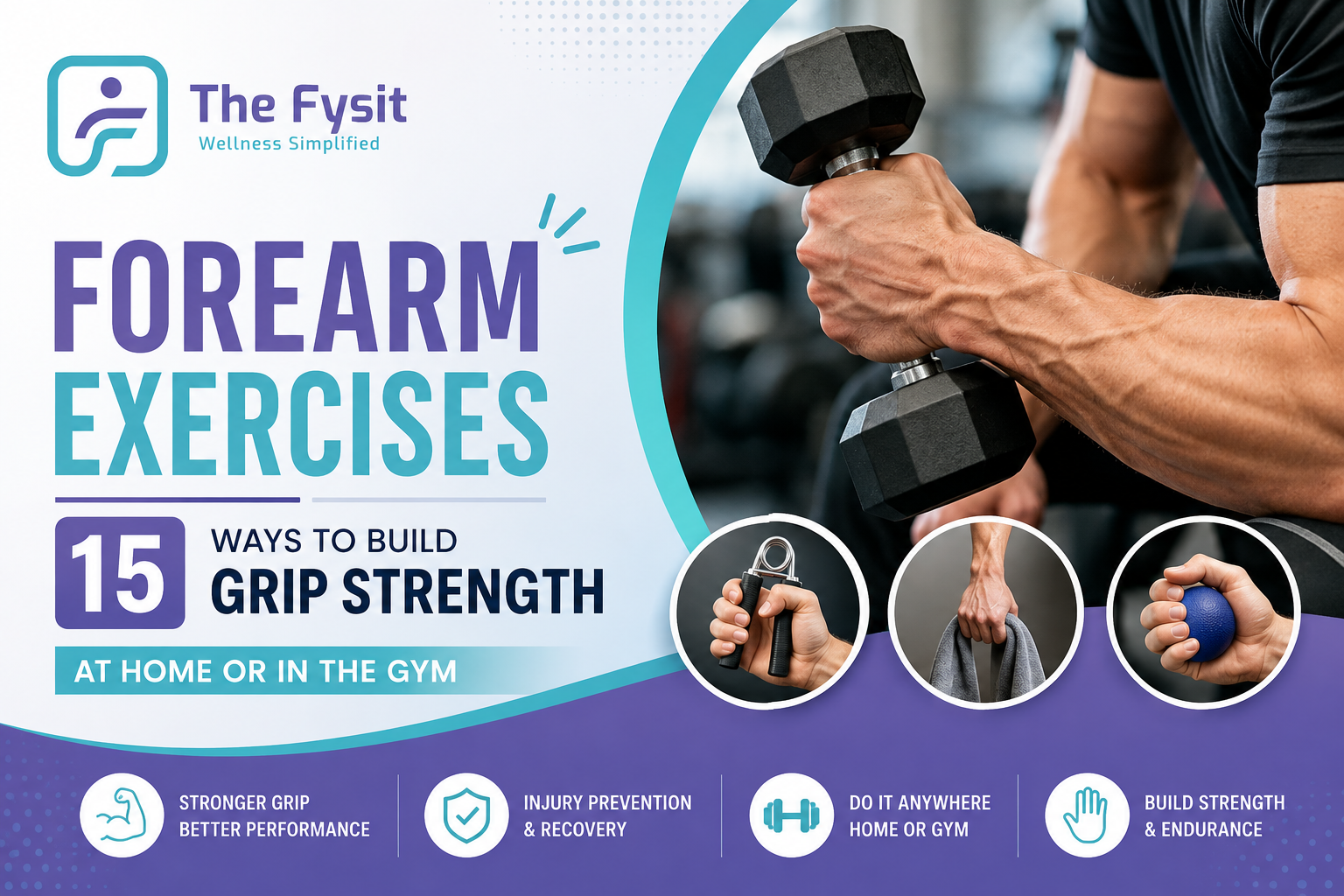
Forearm Exercises: 15 Ways to Build Grip Strength at Home or in the Gym
Why Forearm Strength Matters
Your forearms do more quiet work than almost any other muscle group in your body. Every time you carry groceries, twist open a jar, type on a keyboard, or swing a racquet, your forearm muscles are firing to control your wrist and fingers.
Research has linked stronger grip strength to better overall upper-body function and mobility, which is one reason physiotherapists and trainers often include grip and forearm work in general strength programs – not just for athletes, but for anyone who wants their hands and wrists to hold up over the years.
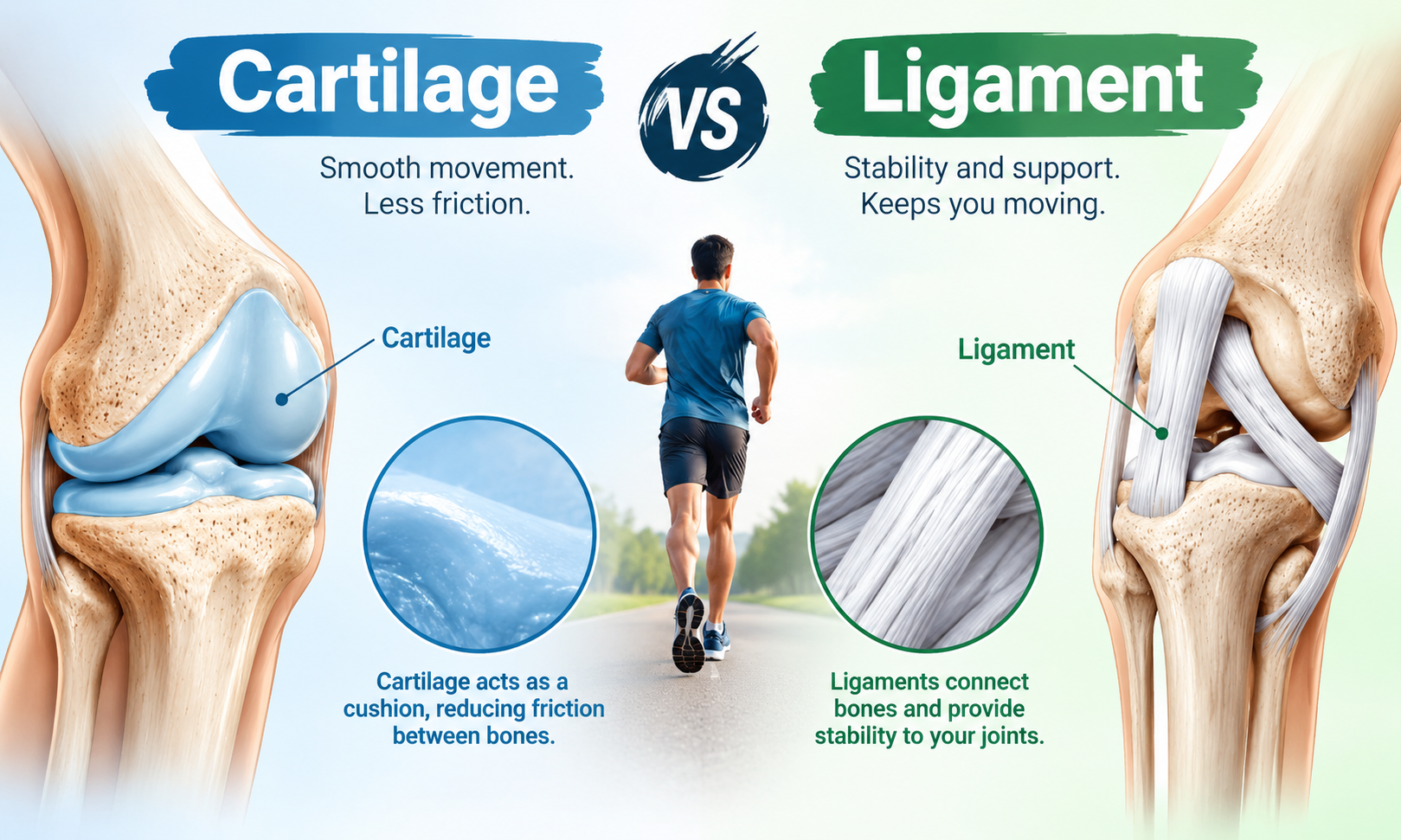
The forearm is made up of two main muscle groups: the flexors (on the underside, which curl your wrist and fingers inward) and the extensors (on the top, which straighten your wrist and fingers back out). A balanced routine trains both, rather than only the flexors that most people default to.
Warming Up Before You Start
Cold forearm muscles and tendons are more prone to strain, especially around the wrist. Spend two to three minutes before any session on:
- Wrist circles, 10 in each direction
- Slow wrist flexion and extension (bending the wrist up and down)
- Gentle finger stretches, spreading fingers wide and then making a loose fist
This gets blood flowing to the joint and reduces the chance of tweaking something mid-set.
Dumbbell Forearm Exercises
Start light – 5 to 10 pounds is plenty for most beginners – since the forearm muscles fatigue faster than people expect. No dumbbells at home? A filled water bottle or a can from the pantry works just as well when starting out.
1. Palm-Up Wrist Curl
Sit down and rest your forearm on your thigh or a bench, palm facing the ceiling, dumbbell in hand. Let your wrist drop back gently, then curl it upward as far as comfortable. Keep the movement isolated to the wrist – your forearm shouldn’t lift off the surface. 2–3 sets of 10–15 reps per arm.
2. Palm-Down Wrist Curl
Same setup, but flip your palm to face the floor. This targets the extensor muscles on top of the forearm, which most training routines neglect. 2–3 sets of 10–15 reps per arm.
3. Dumbbell Grip Roll
Rest your forearm on your knee, holding a dumbbell loosely so it rolls toward your fingertips. Then close your hand and curl the wrist upward, squeezing hard at the top. This move builds crushing grip strength rather than just wrist mobility. 2–3 sets of 10–15 reps per arm.
4. Farmer’s Carry
Pick up a heavy dumbbell or kettlebell in each hand and walk, keeping your shoulders back and core braced. To make it harder, wrap a towel around the handles so you have to grip the fabric instead of the bar. 2–3 sets of 30–40 feet.
Machine and Cable Forearm Exercises
If you train at a gym, cables let you load the forearms through a longer, smoother range of motion than free weights allow.
5. Reverse Cable Curl
Stand facing away from a low cable pulley, holding the handle behind your back. Curl your hand up toward your shoulder, pause, then lower with control. 2–3 sets of 10–15 reps per arm.
6. Towel Cable Row
Loop a towel through a cable handle, grab one end in each hand, and row toward your chest. Because you’re gripping cloth instead of a handle, your fingers and forearms have to work overtime to keep it from slipping. 2–3 sets of 10–15 reps.
7. Cable Wrist Pulldown
Hold a straight bar attachment at shoulder height, palms down, elbows tucked in. Push the bar down using only your wrists, pause at the bottom, then return slowly. 2–3 sets of 10–15 reps.
No-Equipment Forearm Exercises
These moves rely on your own body weight, making them ideal for a garage gym, a hotel room, or a pull-up bar at the park.
8. Pull-Ups
Grip the bar (palms facing away is the standard grip), pull your chin over the bar, and lower under control. Gripping a thicker bar, or wrapping a towel around a standard one, forces your forearms to work harder. 2–3 sets of 8–15 reps.
9. Dead Hangs
Simply hang from a bar with arms straight or slightly bent, shoulders engaged rather than shrugged up. This is one of the simplest ways to build raw grip endurance, and it’s a good entry point if pull-ups still feel out of reach. 2–3 rounds, holding 30 seconds to 1 minute each.
10. Forearm Pull (Cable-Free Version)
Using a resistance band anchored above shoulder height, hold the band with palms down and pull it toward your thighs, keeping elbows close to your sides. 2–3 sets of 10–15 reps.
Forearm Exercises You Can Do at Home
No bar, no bands, no problem – these bodyweight moves need almost no space.
11. Forearm Squeeze
Grab a stress ball, tennis ball, or even a rolled-up sock. Squeeze firmly for 3–5 seconds, then release. This is a low-impact way to build isometric grip strength while watching TV or on a work call. 2–3 rounds per hand, several minutes each.
12. Fingertip Push-Ups
Start in a kneeling or full plank position, but balance on your fingertips instead of flat palms. Lower your chest slowly, keeping elbows at roughly 90 degrees, then push back up. This is an advanced move – build up to it gradually. 2–3 sets of 8–15 reps.
13. Crab Walk
From a seated position, place your hands behind you, fingers pointing toward your feet, and lift your hips into a reverse tabletop. Walk forward on your hands and feet for up to a minute. 2–3 rounds.
14. Plank Shoulder Taps
Hold a forearm-to-full-plank position, then tap your opposite shoulder with each hand one at a time, keeping your hips as still as possible. This challenges wrist stability under load. 2–3 sets of 30–60 seconds.
15. Towel Twist
Hold a rolled towel with both hands and twist it in opposite directions, as if wringing out water. Switch directions halfway through each set. It’s an easy way to hit rotational forearm strength that most routines skip entirely. 2–3 sets of 15–20 twists per direction.
Comparison: Which Method Fits Your Goal
| Goal | Best Category | Example Exercises |
| Build raw grip strength | Dumbbell / bodyweight | Grip roll, dead hangs, farmer’s carry |
| Balanced flexor-extensor development | Machine / cable | Reverse cable curl, cable wrist pulldown |
| Train anywhere, no equipment | Bodyweight / home | Forearm squeeze, towel twist, plank taps |
| Sport-specific endurance (climbing, racquet sports) | Mixed | Dead hangs, farmer’s carry, towel cable row |
How to Build a Weekly Routine
You don’t need a dedicated “forearm day.” A few practical ways to fit this in:
- Add-on approach: Tack 2–3 forearm exercises onto the end of an existing upper-body or full-body workout, 2–3 times a week.
- Micro-session approach: Do a short 5–10 minute forearm-only session on off days – squeezes, dead hangs, and towel twists work well here since they need little setup.
- Progression: Rotate in new exercises every 3–4 weeks so your muscles keep adapting rather than plateauing.
Leave at least one full rest day between harder forearm sessions so tendons and muscle fibers can recover – these matters more here than in larger muscle groups, since the forearm tendons are smaller and slower to bounce back.
Safety Tips and When to Stop
- Work through a controlled range of motion – avoid jerky, ballistic movements, especially with wrist curls.
- Mild muscle fatigue is normal; sharp or shooting pain is not. Stop immediately if you feel it.
- If soreness lingers, ice the area and do gentle stretching rather than pushing through another session.
- If you have a history of wrist, elbow, or tendon issues (like tennis elbow), check with a physiotherapist before starting a new forearm program – they can tailor load and frequency to your specific joint health.
FAQs
Two to three sessions a week is a reasonable starting point, with at least one rest day between harder sessions. Light isometric work, like forearm squeezes, can be done daily since it places less strain on the tendons.
It’s better to alternate days. Daily heavy gripper work doesn’t give the muscle enough time to recover, which can slow progress and increase injury risk over time.
The forearm contains many smaller muscles rather than one large one, so visible growth tends to be slower and more gradual than in muscle groups like the biceps or chest. Consistency matters more here than in almost any other muscle group.
Yes. Grip strength carries over directly to tasks like carrying bags, opening jars, and general hand endurance, and it’s also linked to broader markers of upper-body function.
Absolutely. Dead hangs, forearm squeezes, and towel twists are gentle entry points that build a strength base before adding weighted or cable-based moves.
Key Takeaways
- Forearm training supports grip strength, wrist stability, and everyday function – not just aesthetics.
- A mix of flexor and extensor exercises gives more balanced results than wrist curls alone.
- Bodyweight and household-item exercises are just as valid as gym equipment for building real strength.
- Recovery and gradual progression matter more than lifting heavy right away.
This article is for general fitness information and isn’t a substitute for personalized advice from a physiotherapist or certified trainer, especially if you have an existing wrist or elbow condition.